
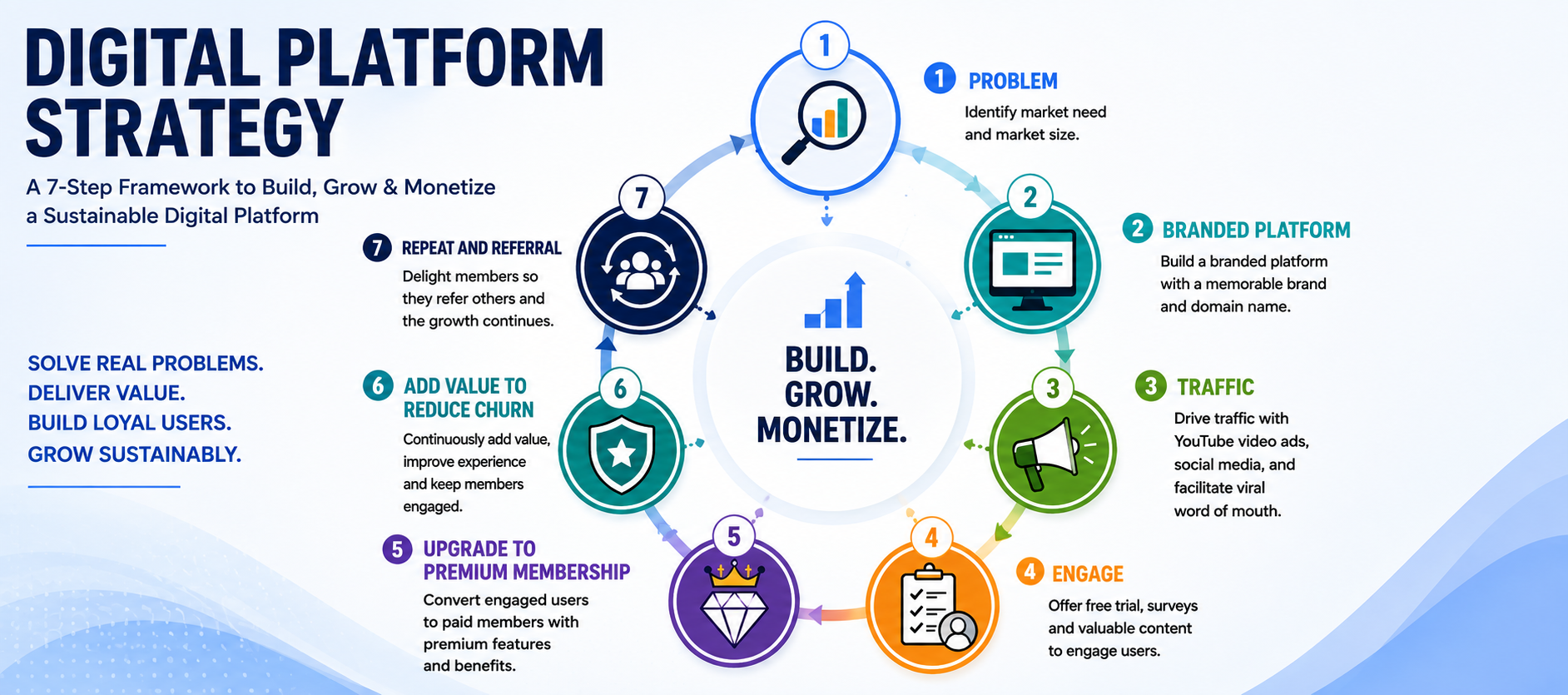
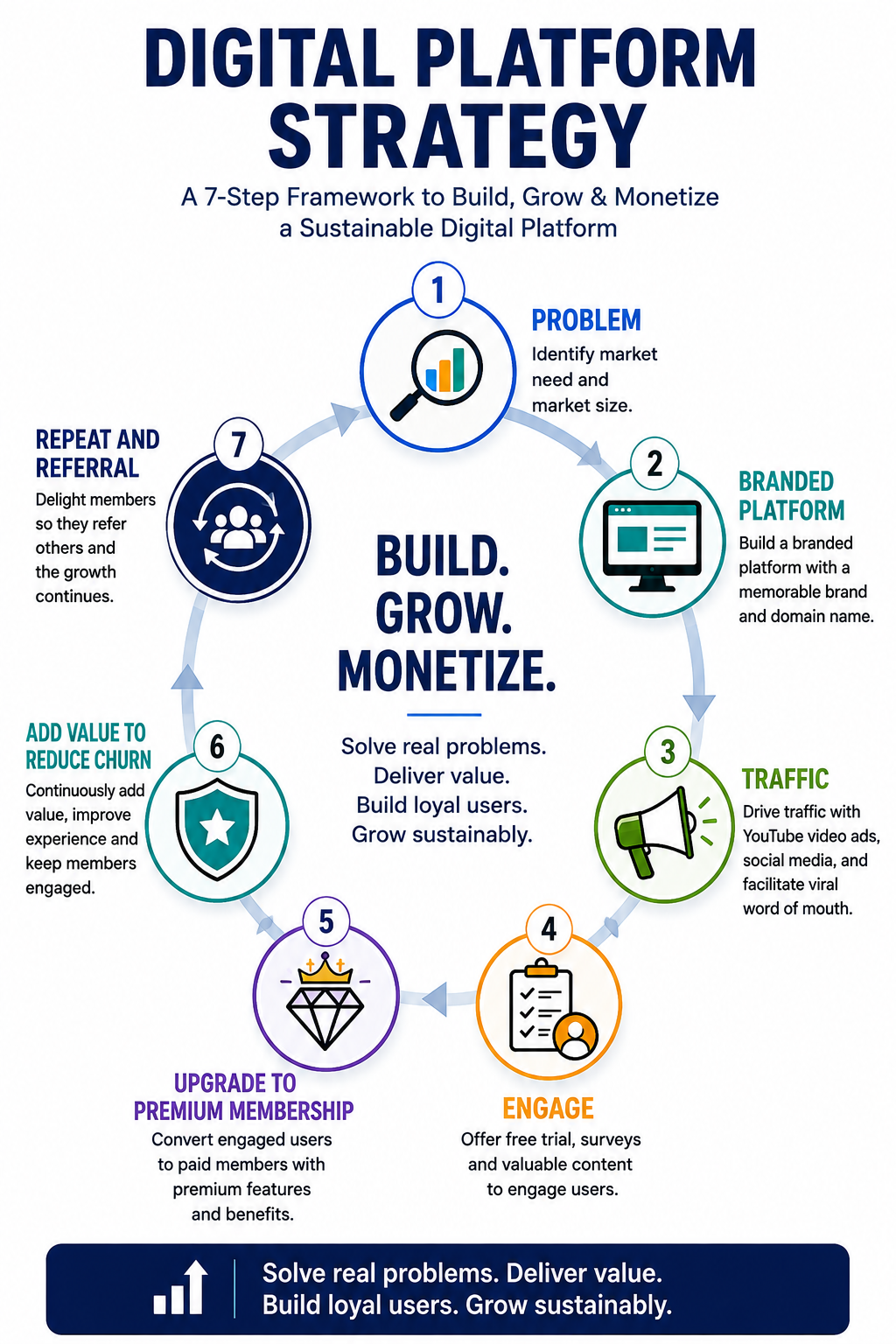





1. Problem – Identify a Meaningful Market Need
Every successful digital platform begins by solving a real problem for a clearly defined audience. Rather than starting with technology, begin by understanding the frustrations, unmet needs, and aspirations of potential users. Estimate the size of the market, evaluate competitors, and determine whether the problem is significant enough that people will invest their time or money to solve it. A compelling problem creates the foundation for every stage that follows.
2. Branded Platform – Build a Memorable Destination
Once the opportunity has been validated, create a branded digital platform that people can easily find, remember, and trust. Select a memorable domain name, develop a distinctive brand identity, and build a website or application that delivers an exceptional user experience. Your platform should become the central destination where customers discover your products, consume content, interact with your organization, and ultimately conduct business.
3. Traffic – Consistently Attract Qualified Visitors
Even the best platform creates little value if no one knows it exists. Develop a systematic marketing strategy to drive qualified visitors using YouTube video advertising, search engine optimization, social media, partnerships, public relations, email marketing, and referral programs. Every visitor should closely match your ideal customer profile. The objective is not simply generating traffic, but attracting people who are likely to become engaged, satisfied, long-term members.
4. Engage – Create an Outstanding First Experience
Your first interaction with a visitor should quickly demonstrate value and build confidence. Offer free trials, assessments, educational content, surveys, demonstrations, or other low-friction opportunities that allow prospects to experience your platform before making a purchasing decision. Reduce barriers to participation while collecting insights that help personalize future interactions. The goal is to create an immediate “aha” moment that encourages visitors to return.
5. Upgrade to Premium Membership – Monetize Relationships
After users experience meaningful value, invite them to become paying members. Premium memberships should provide clear additional benefits such as exclusive content, advanced features, personalized services, convenience, or savings. Make pricing simple and transparent while continually communicating the return on investment. A recurring subscription model provides predictable revenue that supports ongoing innovation and long-term growth.
6. Add Value to Reduce Churn – Build Long-Term Loyalty
Acquiring new customers is expensive, so retaining existing members should become a strategic priority. Continue delivering fresh content, new features, personalized recommendations, outstanding customer support, and regular improvements that reinforce the value of membership. Listen carefully to user feedback and continuously refine the experience. When members consistently receive more value than they expected, they remain subscribers longer and become increasingly loyal.
7. Repeat and Referral – Turn Customers into Growth Partners
The most successful digital platforms create a self-reinforcing growth cycle in which satisfied members naturally attract new members. Encourage referrals by delivering exceptional experiences worth sharing, recognizing loyal customers, and making it easy for members to invite friends and colleagues. As new users enter the platform, they repeat the same seven-step journey—from engagement to premium membership to advocacy—creating a sustainable flywheel that continually expands the platform’s reach, reputation, and recurring revenue.